
Most couples meet their Chicago wedding coordinator at the moment excitement has quietly turned into weight. The venue is booked. The vendors are signed. And somewhere between the seating chart and the ceremony timeline, a question surfaces that no one prepared them for.
Who is actually running this day?
Not the venue. Not the photographer. Not the maid of honor, who deserves to be a guest. The answer is a coordinator, and the work is larger, and begins far earlier, than most couples expect. Our coordination and management service exists for exactly this gap.
In short: A Chicago wedding coordinator manages the full execution of your wedding day: the master timeline, vendor confirmations and arrivals, ceremony and reception setup, guest logistics, and every problem that surfaces before it reaches you. At Bweddings, that work begins in the final months of planning, not the morning of. What couples experience is a day that simply moves, with nothing asked of them.
What Does a Chicago Wedding Coordinator Actually Do?
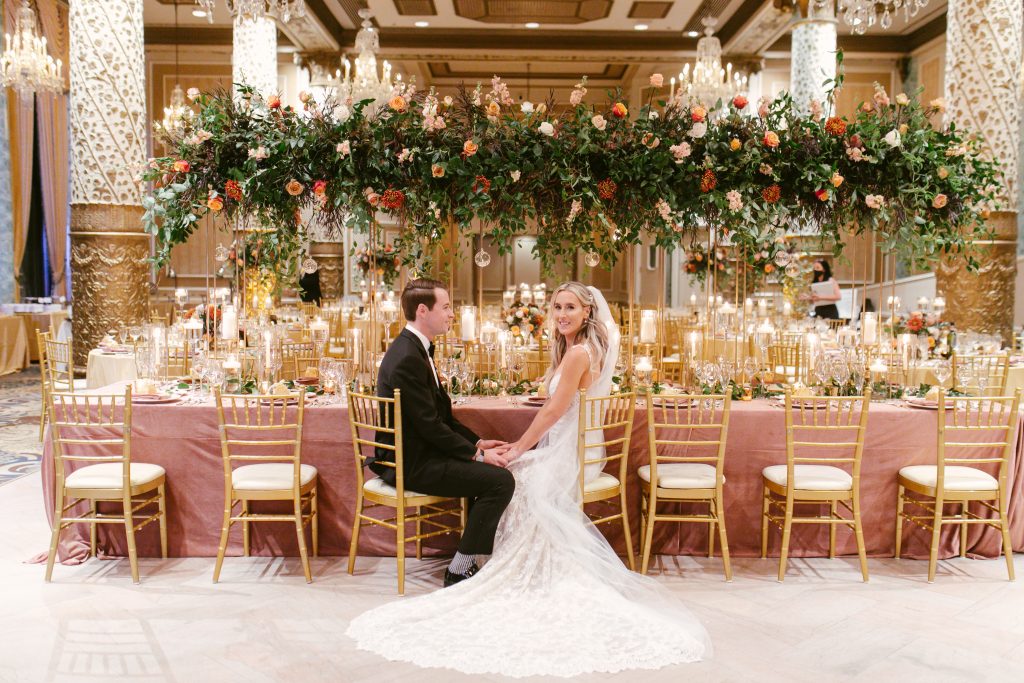
A wedding coordinator takes ownership of execution. That means building the minute-by-minute timeline from getting-ready through the last song, confirming every vendor’s arrival window and scope, overseeing ceremony and reception setup against your design plan, serving as the single point of contact for the vendor team, handling guest needs, and managing the wrap-up so nothing is left behind.
That list is accurate, and it is also incomplete, because it describes the visible work.
The invisible work is the reason couples hire us. It is the florist who arrives forty minutes late and never becomes your problem. It is the boutonnière that goes missing between the ceremony and the family photos and is quietly replaced before anyone notices. It is the uncle who wants to give an unscheduled toast during dinner service, redirected with warmth so the kitchen stays on pace and he still feels honored.
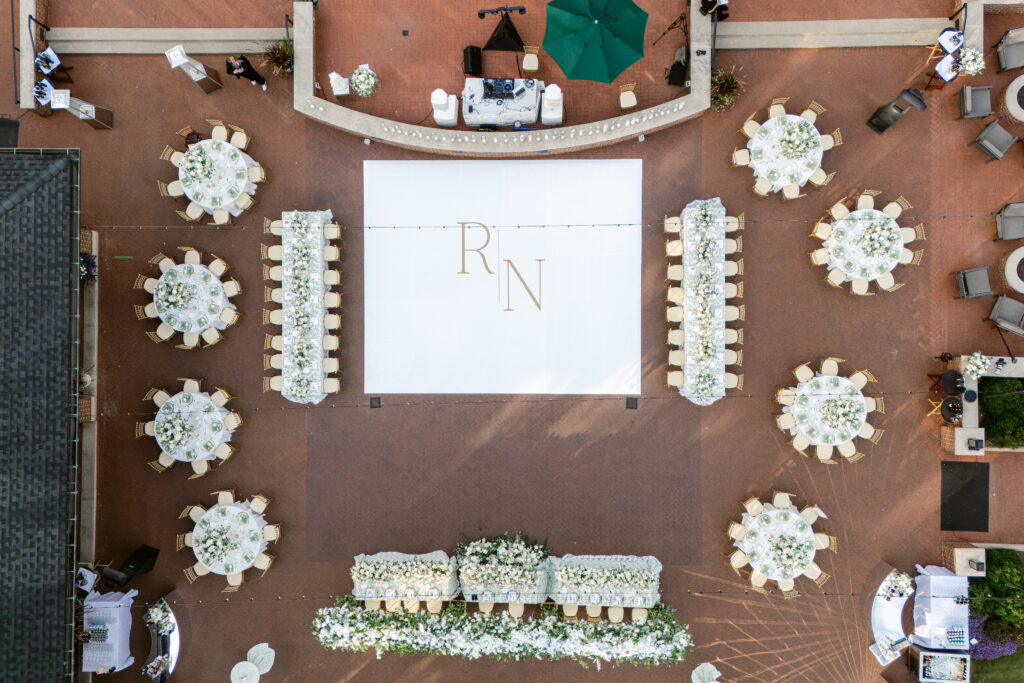
One wedding had a custom white dance floor installed for the reception. During the ceremony a guest was injured and bled on it, and with the chairs and decor still in place, nobody saw. When the room was flipped and the space emptied, the damage was in the middle of the floor, in white, under every light in the room. The venue would not clean it. Neither would the company that installed it. Barbara put on gloves, got down on the floor, and scrubbed it out herself before the doors opened.
The couple danced there that night. They still do not know.
None of that reaches you. That is the point.
When Does the Work Actually Begin?
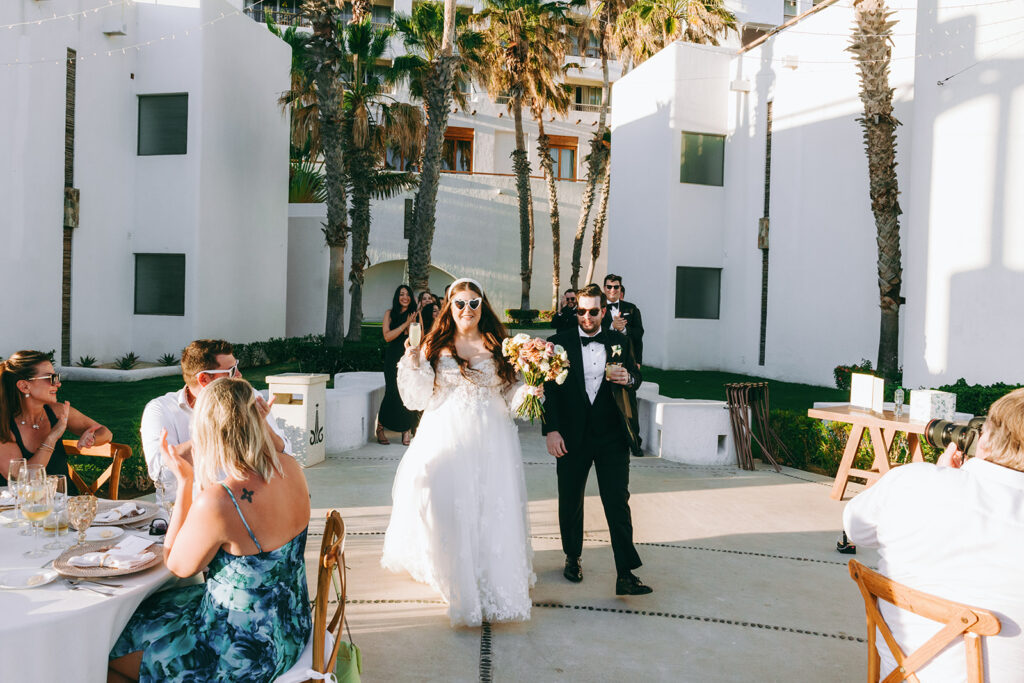
The final months, not the final morning. The term “day-of” is the most misleading phrase in this industry.
By the time your wedding day arrives, we are not starting work. We are executing a plan that has been built, pressure-tested, and rehearsed over weeks.
Here is what those final months actually contain.
- Every signed contract gets read. Not as legal advice, but line by line, to understand what each vendor is providing, what they require from the venue, what is included and what is not, and whether they are a legitimate operator. This is where gaps surface. A contract is almost always missing something the couple assumed was covered.
- We introduce ourselves to the venue and to every vendor and schedule the site visit.
- The site visit is a group walkthrough. We invite the full vendor team. Not everyone can make it, but the florist, the DJ, and catering should be there, and often the photographer too, because understanding how light moves through a room matters, particularly somewhere we have not worked before.
- Before the walkthrough we sit with the couple and go through every idea and plan they have, and ask how they picture the day unfolding.
- The timeline gets drafted from their vision with our input on flow. It is revised continuously as contract gaps appear and as the couple’s thinking evolves, which it always does.
- The timeline goes out to every vendor for feedback. Each of them is a professional. The DJ knows music. The photographer knows light and timing. We want that input, and we build it in.
A coordinator who genuinely arrives the day of is not coordinating. They are improvising in front of your guests.
This is also where the most meaningful conversation of the entire engagement tends to happen. Barbara has a practice of telling every couple, before the wedding, that something will go wrong. Not as a warning. As a release.
Watching a couple’s shoulders drop when they hear it is one of the most significant moments in the work. Something will happen. We will handle it. You will likely never know.
The reframe matters more than any checklist. Perfection is a standard no wedding has ever met. Being protected is a standard we can actually deliver.
What Does a Coordinator Actually Do on the Wedding Day?

The work starts hours before you do. Your coordinator arrives ahead of the first vendor, walks the room against the design plan, and receives every delivery as it lands. From that point forward the day runs on a timeline the vendor team has already confirmed, and every question, delay and change routes to us instead of to you.
The morning belongs to logistics. Florals arrive and are placed against the plan rather than against someone’s best guess. The photographer gets the family shot list and the names that go with it. The getting-ready space stays calm and on schedule, which sounds small until you have watched a hair and makeup timeline slip forty minutes and take the first look with it.
The most common timeline mistake is not accounting for real life. Traffic. A bathroom break that runs long. The wedding party scattering at the exact moment photos are called. A family member wandering off for a drink. A bridesmaid who left something in her room, misses her glam slot, and puts the whole hair and makeup schedule behind.
So we build a thirty-minute buffer into everything. Not into the parts that look risky. Into everything.
Couples push back on this. They look at the timeline, see the margin, and ask for it to be tightened. We sit down and explain why it is there, and we hold the line, because the buffer is the only reason the day still works when one thing goes sideways at four in the afternoon.
By early afternoon the focus shifts to the ceremony. Seating, processional order, the cue to the officiant, the musicians knowing exactly when to change the piece. We hold the order of who walks with whom, which matters more in blended and multicultural families than any other detail of the day.
The reception is where a timeline earns its keep. Vendor meals, toast order, the cake, the moment the dance floor opens. When dinner service runs long, and at some point it usually does, the compression happens in the background. We decide what gives, tell the vendors who need to know, and leave the couple entirely out of it.
Then the part nobody photographs. Gifts and cards accounted for. Personal items returned to the right room. Vendors loaded out and the venue left as we found it.
Across all of it, the measure of the work is what never reaches you. Not the late florist. Not the missing boutonniere. Not the guest who needs a ride and the uncle who wants an unscheduled toast.
You should finish your wedding day with no idea what went wrong.
That is the job.
What Is the Difference Between a Wedding Coordinator and a Venue Coordinator?
The venue coordinator works for the venue. Your wedding coordinator works for you. That single distinction resolves most of the confusion around this question.
A venue coordinator is responsible for the building: room turnover, catering service, staffing, and the venue’s own operational standards. They are genuinely valuable at what they do, and at rooms like the Chicago Athletic Association or The Drake they are often excellent. But they were not in the room when you chose your florals. They do not know that your grandmother needs to be seated before the processional begins, or that the first dance song has a false ending your DJ needs to anticipate.
They are also, in most cases, managing more than one event that weekend. And when their shift ends, it ends.
Your coordinator holds the whole picture. Your design intent, your family dynamics, your vendor relationships, your priorities for the day. When the venue’s interests and yours diverge, and occasionally they do, your coordinator is the one advocating for you.
That advocacy is not theoretical. Couples have gone to a venue coordinator directly to ask for something unusual, or more flexible than the standard, or something the venue had simply never done before, and been told no. They brought it to Barbara. Because the relationship was already there, she was able to ask for the same thing as a personal favor, and the couple got what they wanted.
A venue says no to a request. A venue says yes to a relationship.
Monica Hershman put it plainly after her wedding: “She was the reason our wedding timeline was seamless and all vendors were accounted for.”
How Do You Know If Day-of Coordination Is the Right Fit?

Wedding coordination suits couples who have already made their major decisions and want expert execution rather than ongoing design partnership. If your venue is secured, your vendor team is largely booked, and your vision is clear, this is likely the right level of support.
Choose full wedding planning and design instead if you are early in the process, if you want help shaping the aesthetic direction, or if you are managing demanding careers alongside a wedding that involves multiple events or a guest list that travels.
There is one pattern worth naming. The couples who most often tell us they will handle the day themselves are the organized ones. The planners. The people genuinely capable of running it.
They are also the couples who, without wedding coordination, spend their own wedding working.
There is something else we see in the last two weeks, and it is rarely talked about openly. Emotions run high. Everyone has an opinion on the final details. Couples are not always at their kindest with each other in that stretch, and we think they notice it in themselves, and quietly decide not to say so.
It is understandable. There is an enormous amount happening in those fourteen days. Most of it is decisions. Almost none of it is the marriage.
Handing that fortnight to someone else is not an admission of anything. It is how couples arrive at the day still liking each other.
Kathryn C. described the alternative after her wedding: “I went into our wedding weekend feeling calm and assured, something I never imagined for myself as a self-proclaimed perfectionist. I was able to be fully present and actually enjoy the day, which is truly priceless.”
That is the trade. Not control for chaos. Control for presence.
What Should You Look for When You Hire a Wedding Coordinator in Chicago?

Look for certification, venue familiarity, a defined process, and a team rather than a single person. Those four signals separate professionals from enthusiasts more reliably than any portfolio.
Certification matters because this industry has no barrier to entry. Barbara holds credentials from the Wedding Planner Institute of Canada and the CWP Society, and is an ordained officiant through American Marriage Ministries. Ask any wedding coordinator you are considering what training stands behind their work.
Venue familiarity is practical, not decorative. A coordinator who has worked at Skokie Country Club, Rockwell on the River, The Blackstone Hotel, the Chicago Botanic Garden and so on, already knows each room’s load-in constraints, lighting behavior, and weather contingencies. You can see the range of rooms in our portfolio of Chicago and destination celebrations. If you are still choosing a room, our guide to unexpected venues across the city is a useful starting point.
A defined process tells you the work is systematic rather than improvised. Ask what happens in the ninety days before the wedding, specifically.
And ask how many people will be on site. A single coordinator cannot be at the ceremony rehearsal, the bridal suite, and the reception setup at the same time. At Bweddings, one of our lead wedding coordinators, Emmanuelle, leads coordination with a team behind her. Nadiia P. wrote afterward that Emmanuelle “handled every detail flawlessly so we could simply relax and enjoy the moment.”
What Does Planning a Wedding in Chicago Actually Require?
Three things, consistently: time built in for traffic, a parking plan that is decided rather than assumed, and a design that holds up in wind. Every city has permits and rules. Those are not what makes this one different.
Traffic here is not a minor variable. Barbara once left Glencoe for a downtown appointment and arrived two and a half hours later. That is a wedding party transfer, a vendor load-in, or a first look, depending on which hour it lands in. Any timeline built for a North Shore wedding with a downtown element has to assume the slow version of that drive, not the fast one.
Parking is never a given. There is street parking, there are lots, there is private parking, and all of it takes longer than anyone budgets for. Guests included.
And the wind. The forecast here is usually accurate about temperature and rain, and almost beside the point, because one thing is true on any date in the calendar: it will be windy. Not occasionally. Always. So the tall arrangements get weighted, the place cards get a plan, the ceremony programs do not sit loose on chairs, and the outdoor cocktail hour has a version of itself that works at twenty miles an hour.
Individual rooms carry their own constraints, and the ones that matter are rarely on the tour.
At the Adler Planetarium, the view, the building and the catering are all genuinely excellent. What couples never think to ask about is vendor setup and teardown time, which is not flexible there. If the design calls for substantial florals and a significant rental package, that fixed window means more hands on the team to install it in time, and more hands is a real cost. That conversation belongs in the budget at the proposal stage, not three weeks out.
At the Hilton Chicago, as at many of the large hotels in this city, setup runs on union labor. That is a professional, experienced crew, and it is a good thing. It also shapes how the entire setup day is staffed and scheduled, and a planner who does not know that in advance is building a timeline that will not survive contact with the loading dock.
Neither of those appears in a venue brochure. Both change what a wedding costs and how a day is built.
What Does Wedding Coordination Cost in Chicago?

Wedding coordination sits at the more accessible end of professional wedding planning. Across our full range of services, investments typically fall between $3,600 and $15,000 and above, depending on the level of support and the complexity of the celebration. Wedding coordination occupies the lower portion of that range, full planning and design the upper end.
Chicago’s market varies considerably, and the lowest quotes usually reflect a single coordinator working alone with no preparation period built in. Our breakdown of wedding planner packages and pricing walks through what separates the tiers.
One note on timing. June, September and October are Chicago’s peak months, and the strongest wedding coordinators are reserved twelve to eighteen months out. January and February offer real availability and vendor flexibility.
Frequently Asked Questions

A wedding planner works with you from the beginning, shaping design direction, sourcing and contracting vendors, managing budget, and guiding the entire process over many months. A Chicago wedding coordinator joins in the final stretch to execute a plan you have already built. Bweddings offers both, along with a custom option for couples who need expertise in specific areas rather than start-to-finish support.
Nine to ten months before the wedding is the practical window, and twelve to eighteen months for June, September and October dates, which are Chicago’s peak season. Earlier is always safer for premium venues. If your wedding is closer than six months, it is still worth reaching out. We take on compressed timelines when the date is open and the scope is achievable.
Yes, in most cases. A venue coordinator is responsible for the building, the catering service, and the venue’s own staff. They do not manage your outside vendor team, your design setup, your family logistics, or your personal timeline, and they typically leave when their shift ends. The two roles are complementary rather than interchangeable.
Wedding coordination begins in the final 3 months of planning rather than on the wedding day. That period covers vendor confirmations, contract review, timeline construction, a venue walkthrough, and a full run-through with you. The wedding day itself is execution of a plan that already exists.
Something usually does, and it is handled before it reaches you. Our team manages vendor delays, weather changes, timeline compression, and the unexpected requests that surface at every wedding. Barbara tells every couple this directly in advance, because knowing you are protected is more valuable than believing nothing will happen.
Yes. We plan and coordinate milestone birthdays, anniversaries, engagement parties, bridal showers, corporate gatherings, and private celebrations throughout Chicago and the North Shore, held to the same standard as our weddings. Our private events service covers design, vendor sourcing and management, and full day-of execution.
Yes. We work throughout the North Shore, including Glencoe, Winnetka, and Lake Forest, and across the greater Chicago area + Wisconsin and Michigan. We also plan destination weddings in Italy through our partner in Italy, along with celebrations in Mexico, Canada, and elsewhere internationally.
It helps, but it is not the thing that should decide it. The most common question Barbara is asked is whether she has worked at a couple’s venue before, and couples sometimes sound disappointed to hear no. Knowing a room means knowing its rules and its shortcuts. It also means arriving with assumptions, where a new room gets a fresh eye and real enthusiasm, which shows in the design. The better question is what a coordinator’s approach is when they have not worked at a venue before. For Bweddings, that means contacting the venue coordinator well ahead of time and booking a private solo site visit purely to learn the logistics, on top of every walkthrough done together with the couple.

We welcome you to begin the conversation. Share your date, your venue, and where you are in the process. We will tell you honestly what level of support your wedding calls for, even if that answer is less than you expected.
You have planned enough. The day itself should ask nothing of you.
Written by Barbara Vanni, founder and lead planner at Bweddings in Chicago. Barbara is a certified wedding planner through the Wedding Planner Institute of Canada and the CWP Society, and has planned and coordinated more than 300 events across Chicago, Italy, Mexico, Canada and the United States since founding Bweddings in 2014.
Share this post


